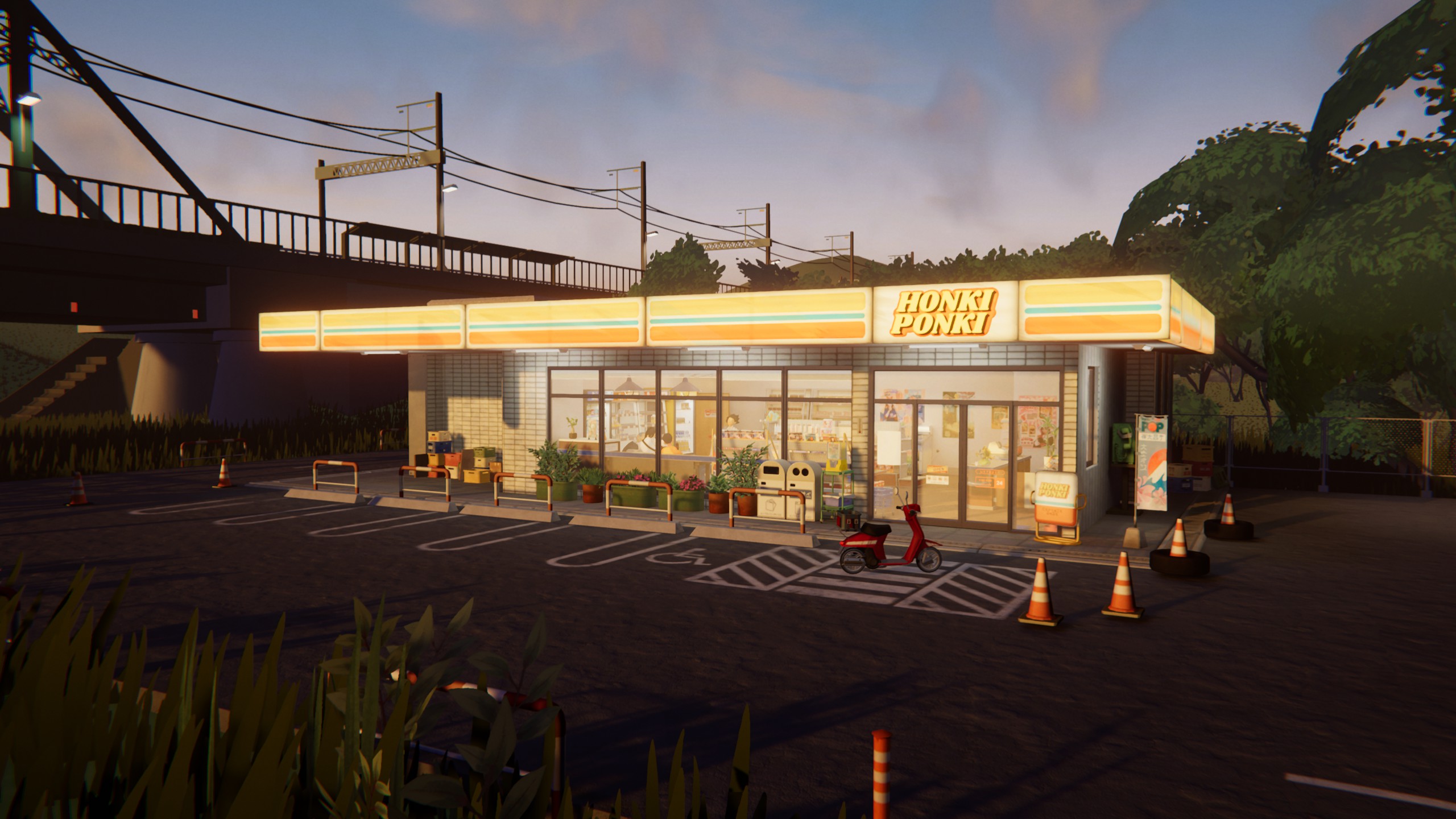
I finished inKonbini: One store. Many stories earlier this week and am back with my thoughts. Released on 30 April, inKonbini is a cosy, life simulation game developed by Nagai Industries. So far it has garnered a lot of attention and received Very Positive Steam reviews, which is awesome! It has been the game on my lips for the last couple of weeks too.
This game was on my wish list for 2026. While I liked it, to my surprise, I didn’t love it. If you’re curious, I’ll get into it more below!
Would I Recommend inKonbini?
Firstly, I will say, this game is a LOT shorter than I hoped it would be. In my mind, it was a meatier, 10-20 hours story and perhaps even open-ended, post-story. InKonbini will take most players around 6 hours or less, maybe a few hours longer for completionists.
Secondly, inKonbini is more a narrative-driven sim than a supermarket type sim. So if you’re after more supermarket or shop simulator gameplay, this game might actually disappoint you.
I would therefore recommend it for players who are after a short, narrative-first simulation game in a konbini setting, as opposed to a konbini simulator with a narrative brewing in the background. If that makes sense.

Feel free to check out my demo impression too.
The Narrative
InKonbini is about a young college student, Makoto, who is spending the week working night shifts at her auntie’s Japanese convenience store. Over the course of her shifts, she meets an interesting cast of characters who she forms connections with. The game focuses on these characters from different walks of life.
Narrative Direction & Pacing
The story starts off on Makoto’s first night shift. It is also the same starting point as the demo, but with more details added. Admittedly, it is a bit slow for the first few nights as you meet everyone and get comfortable running the store, but then picks up pretty quickly towards the end.
One of the let downs is the pacing and overall scope. InKonbini has a lovely narrative but would have been better if it took its time. I think the ideal length for this game could’ve been two weeks to a month for it to feel ‘realistic’ to me. Although it’s set in a small town, I would’ve loved some ‘uneventful’ nights in between the story beats to enjoy more of the gameplay. Perhaps even filler customers with minimal or tiny backstories just to make the town feel more alive.

Themes
The themes explored in inKonbini are universal, despite being set in a 90s convenience store in Japan. It is a slice of life focusing on the quiet moments that we often overlook in life. The lesson of learning to appreciate each moment is one I am practicing, so many parts of this game really resonated with me.
The other big theme was connecting with others, and how sometimes people that you meet in the most mundane circumstances can have a profound impact on your life. While I appreciated the direction they were heading with this, and understanding how fleeting some experiences are, it didn’t quite land with me. I enjoyed the writing for the most part, and there were many poetic lines, but some parts of the script held no emotional weight and were a bit much. Coming from someone who loves heartfelt moments in games too. At times Makoto also comes across a tad too cliche or melodramatic in her monologues. Again, if the game was stretched out over a bit more time, it could’ve felt more organic and justified.
The Characters
I didn’t think much of the characters at first, but they did really grow on me towards the end of the game. Perhaps in a way, inKonbini intends this, because it does reflect reality; how often do we meet someone who doesn’t leave a very strong first impression, but becomes more interesting the more we get to know them?
InKonbini invites us to be curious about others through Makoto, a very humble, patient and respectful protagonist. Her work ethic is also inspiring, and her kindness is such a beautiful trait. The handful of other characters are entertaining but also ordinary enough to remind us of people in our own lives. Except the kid, he was too ambitious and out there for me to relate to!
Makoto learns about these other characters’ lives when they come into the store and helps them resolve any internal conflicts. This is quite reminiscent of a time where people used to be more comfortable confiding in strangers in-person, something that is unfortunately not the norm anymore these days (we would rather just post it online). It was nice to live in that reality for a moment though!

Gameplay
The days are broken into shifts in inKonbini, with a ‘life lesson’ for each shift. Each shift features two main gameplay mechanics: the konbini tasks and serving the customers.
Shift Tasks
There are various tasks to be done by the end of the shift, and observing the environment is integral in this game. Tasks are what you would expect in a store including: fulfilling orders, placing a new delivery, stocking shelves, reorganising display, putting items on sale, and yes, making phone calls. There was a simplicity to it that I was immersed in.

Customer Interactions
Customer interaction is the way to advance the narrative. After the store is open, customers start coming in. They are predetermined, have a set script, and often need your help finding certain products. Be prepared to offer free therapy to customers as you listen to them overshare about their lives! Unfortunately, due to the tight cast, the game did feel pretty empty at times. Especially when you only had like three customers a night, served one at a time, and made less than 5000 yen in a shift…

Fortunately, inKonbini is not demanding, time-wise. Players go through one shift per in-game day, and as mentioned, there are a finite number of shifts. The great thing is there is no strict time pressure to complete tasks in the store. For example, if you’re helping a customer find a product, you can walk away and do other things and come back with no penalties. Most of the tasks were straightforward, but some did require you to think outside of the box. The game does a great job at balancing player autonomy with story linearity.

Audio & Visual
Visually the game had a retro aesthetic, with many style choices referencing the 90s, including the old landline telephone, physical notes around the store (as opposed to a digital messaging app), and even accepting cash only at the register. The calm, acoustic instrumentals elevated the experience, fitting in very well with the rest of the game. There was minimal voiceover work, but it was tastefully added. I have no complaints on this front!

Overall Score
At its core, inKonbini is an intriguing narrative in a unique setting with attractive gameplay. However, this is one of those rare times where I find myself oddly wanting less story and more shelf stocking. Players may also find the price tag from $29.99 AUD on the steeper side, especially since the game is short and the only replay value is in completing all the achievements.
As someone that enjoys romanticising life though, it holds a lovely message for players that I can most definitely get behind. InKonbini reminds us to pause and enjoy the quiet moments in our lives — and to be kind to everyone we meet. You never know when a conversation with a stranger can change your perspective, or even trajectory, in life.

I rate inKonbini a 7.5/10.


Leave a Reply